
Lesson Plan: Assemblage
Patchwork and Collage, with a Cento Writing Prompt

“Sometimes we are so confused and sad that all we can do is glue one thing to another.”—Lynda Barry

My friends! If you’re new to this space, here is where you can learn more about me and Mourning Pages. And if you want to check out my debut novel, Doll Parts, it’s now available in both paperback, hardback, audiobook, and e-book.
Please consider subscribing if you haven’t already.
Today’s lesson plan is about literary patchwork and collage. Assemblage. William S. Burroughs says, “All writing is in fact cut-ups. A collage of words read heard overheard. What else?”
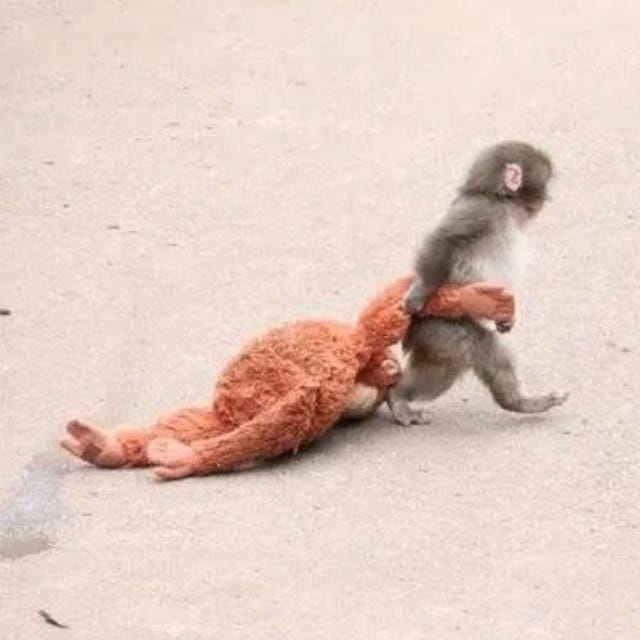
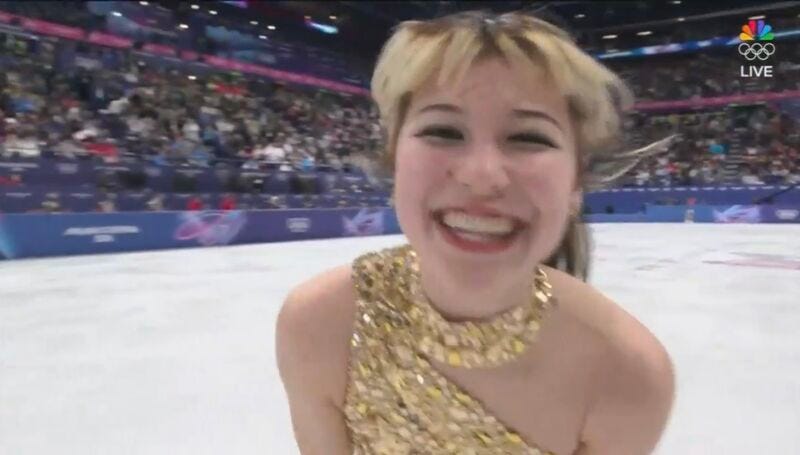
I’m obsessed with collage, the same way I’m also obsessed this week with finishing things (resets, closing the loop) and Punch, the macaque, dragging around his surrogate plushie, and Alysa Liu spinning on the ice with such radiant joy, and Nina Schuyler’s How to Write Stunning Sentences, and Louise Erdrich’s “Advice to Myself” (“Recycle the mail, don’t read it, don’t read anything/except what destroys/the insulation between yourself and your experience”) and also ghost forests like this one on Bulls Island, South Carolina.
Think of this lesson plan is a starting place that you may pick back up later. And, yes, it is meant for you. Even if you don’t call yourself a poet, today you are one.
If this were the start of class, I’d already have a free-writing prompt on the board for you to begin.
Today’s Free Write, make a list of phrases or lines that live in your head rent free. Song lyrics, quotes, overused sayings, ads, cliches, things your mom used to tell you.
Write for five minutes. Set a timer if it helps.
Is this a list we can use? Always. But if not for today’s activity, add it to your journal or wherever you keep all the glimmers and shards and daily debris that you don’t want to forget, that one day you can slip seamlessly into that beautiful thing you’re creating.
I’m reminded of this dress I used to own, back in the 1900’s, that I bought at a store in the mall called Rave, where loud music always boomed from the speakers and the clothes could best be described as “trashy chic,” which I mean with sincere affection. The dress I’m thinking about was denim at the top and made out of brightly colored quilted squares on the bottom. I’m pretty sure I owned a couple dresses like this, funky patchwork, cheaply made, perfect to wear with boots or high heeled sneakers.
What I’m saying is that I don’t know how to quilt but I will spend my whole allowance on anything that resembles Dolly’s Coat of Many Colors.


(When I tell you that I can fall down a rabbit hole or two, I know you know what I mean. In Week 6 of my semester, my students are, I think, getting used to it).
We can start with the idea of quilting and patchwork, then move into collaging, so we have all of these visuals in our heads before we get our hands dirty. Maybe you’re in the front row, itching to get started, frustrated when I dim the lights for a short video, or maybe you’re one of the back row students skeptical about where this all going.
Either way, during quarantine, playwright Donald Margulies made this video about collaging (among other things) that I think about almost weekly, mostly because I would kill for a basement artist studio like this.
At risk of being the teacher that shows too many videos (is that a thing?), I have one more, a recent obsession with the artist Stephanie Gilbert who is making a tarot deck using the collage method.
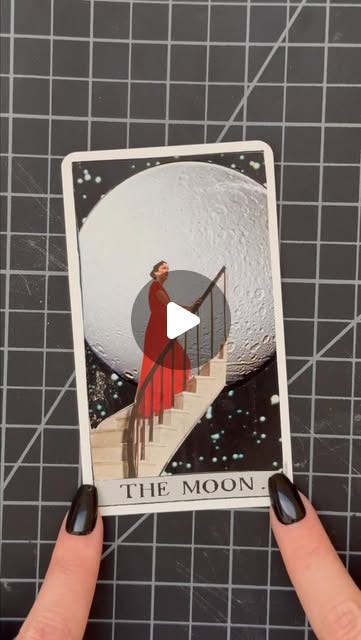
Her process is so much fun to watch, though, in general, I’ve found myself wanting the algorithm to only give me videos of real humans making real art. Go figure.
And then I have to mention zines. As it turns out, most of my creative writing students know what zines are because I’m told they’ve made a comeback, but I always have a few who surely appreciate me going down another rabbit hole about 90s-era riot grrrrl zines. I wish I still had the zines I made even if my back now hurts remembering how much time I spent sitting on a floor, Fiona Apple on in the background, cutting up fashion magazines. And wasn’t that a brilliant use of time? I was just out there creating stuff with my friends for no one to read other than us. Why does that sound like such a radical notion?
Swedish musician, Jens Lekman says the beauty of collaging is that “you’re using sounds that have never met and were never supposed to meet. You introduce them to each other, at first they’re a bit shy, clumsy, staring at their shoes. But you can sense there’s something there. So you cut and paste a little bit and by the end of the song you can spot them in the corner, holding hands.”
So, let’s do that. The holding hands part. Let’s write a cento.


Cento= latin for “patchwork.” Lines from different sources and different authors are stitched together into a quilt of a poem. In Dear Writer, Maggie Smith describes it as a poem, “assembled using the lines of other poets. Memory, too, is assemblage - a kind of cento, collaged from pieces. From the scraps of life.”
When I recently assigned a cento to my creative writing students, they were limited to using lines from Dear Writer, our textbook this semester. The results were SO GOOD.
I worried at first that by requiring this one book as our only source material, the results would feel stilted, but every sentence Maggie Smith writes is a poem, even in prose, so no worries there. When you write your own cento, and I hope you will, I recommend imposing guardrails or constraints, which can actually feel creatively freeing.
Some examples to get you started:
“Cento Between the Ending and the End” by Cameron Awkward-Rich
“on naming yourself (a cento)”: by Jamila Woods
“Wolf Cento” by Simone Muench
David Lehman says that “Writing a cento may be a kind of extension of the act of reading, a way to prolong the pleasure.” To which I say, yes please. A new way to deepen the reading experience, to think about the word choice and line breaks like a writer and a reader at the same time, that’s what a cento can do.
If you collect lines and fragments and quotes like I do, if you also have a virtual folder of screenshotted poems, then you already have the raw materials. No scissors and glue needed, though that would be really fun, too.
As a reader, I like when the poet lists the original sources at the end of the poem so I can see the seams. In the age of AI, it has also become essential for me to require the sources, which means this is the kind of assignment that could be adapted for all sorts of classes and grade levels.
And since we’re all eternal students anyway, it also means there’s always homework to do. You just get to assign it to yourself.
Thank you for being here. I’m hoping to have some Book 2 updates soon, but I can at least share that Accidents Never Happen is coming out January 2027!!! The edits are done and I CAN’T WAIT for you to see the cover.
Meanwhile, I’m headed to Baltimore for AWP next month and I am now officially registered for ThrillerFest this May. If you’re headed to either conference, please find me!
Love love love—Penny
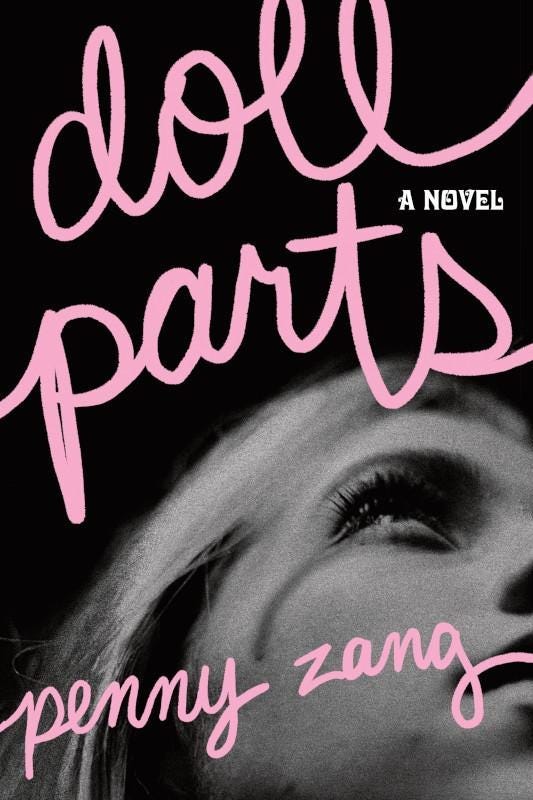
For readers of literary suspense, dark academia, for lovers of Sylvia Plath, 90s vibes, and stories of female friendship, and for anyone who has ever experienced loss, find Doll Parts at your local indie bookstore or these retailers online:
If you’ve already read Doll Parts, please tell a friend! Word of mouth is the best kind of support.
Penny, you are not going to believe this, but "Cento = Patchwork in Latin" is a phrase on a sticky note hanging on the cork board above my writing desk. It is part of my current novel project, which is so cool. It's like you wrote this post for me. Ha! Thanks for the book recommendation, I have added Maggie Smith's DEAR WRITER to my TBR pile. Can't wait to read your next book. ❤️
You have a release date for Book 2?!?? 😍😍😍😍😍